

The Square Kilometre Array is so sensitive that its data center requires two Faraday cages
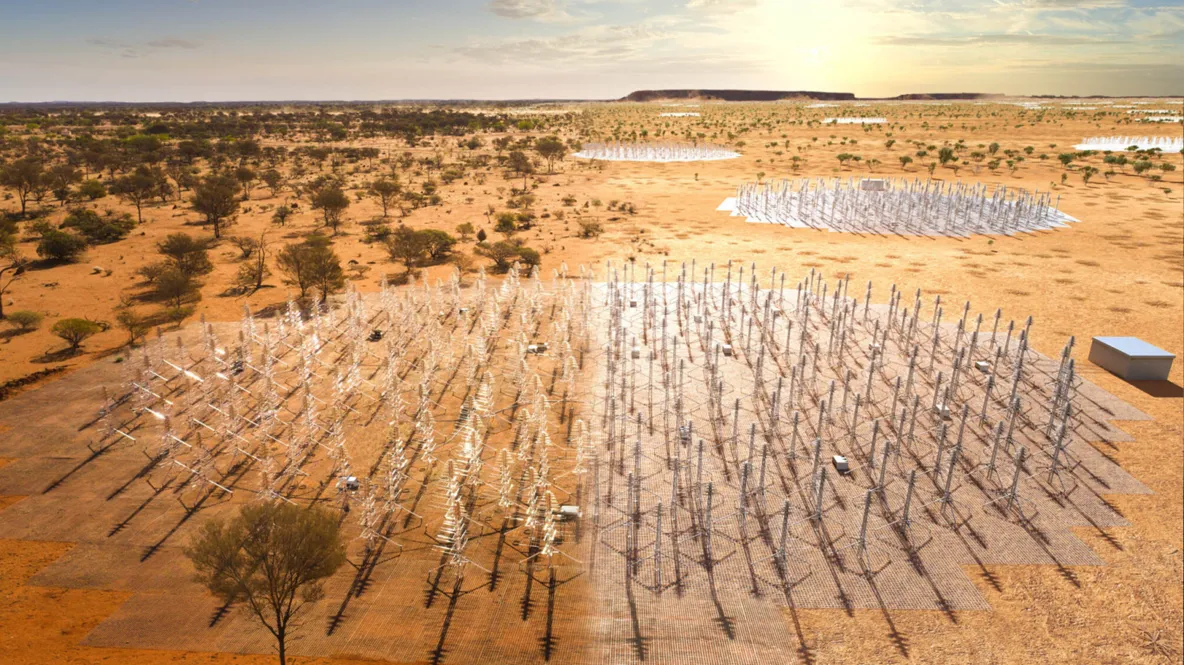
Construction on a highly specialized data center for the Square Kilometre Array (SKA) in Western Australia is nearly finished. The facility is enclosed within two massive Faraday cages to ensure that its powerful computing equipment doesn't emit radio waves that could disrupt the world's largest and most sensitive radio telescope.
What is the Square Kilometre Array?
The SKA is a groundbreaking international project designed to give humanity unprecedented new insights into our universe. Since work began in 2022, the team has already installed over 12,000 of the planned 131,072 individual antennas, which will eventually form a collective receiving area of about one square kilometer.
A High-Tech Hub in a Remote Desert
The project's Australian site in Murchison was chosen for its extreme remoteness and low levels of human-made radio interference. However, the powerful computers needed to process the telescope's data are a major source of this interference. The on-site data center, containing about 100 server racks, will use FPGAs to filter terabytes of daily data, sending only the most valuable information to supercomputers in Perth through a 10 Tbps fiber optic link.
The Challenge of Total Radio Silence
To protect the SKA's ability to detect extremely faint cosmic signals, the entire data center is encased in two nested Faraday cages—metal shields that block electromagnetic energy. Even the building's entrances are shielded to prevent any signal leakage.
People essentially walk through airlocks. The inner door won't open until the outer one is closed. And they make 'Star Trek'-like sounds when they open and close.
Project Timeline and Future Discoveries
While full construction is expected to continue until 2029, the project is rapidly advancing. The SKA team plans to invite scientists to submit observation proposals next year, with initial test runs beginning in 2027.
By then, we will have the world's largest low-frequency telescope
He anticipates that scientists will use this early access to test the facility with complex and ambitious observation projects, pushing the boundaries of what we know about the cosmos.