

ChatGPT Ads: What is Known About Advertising in ChatGPT With a CPM of $60
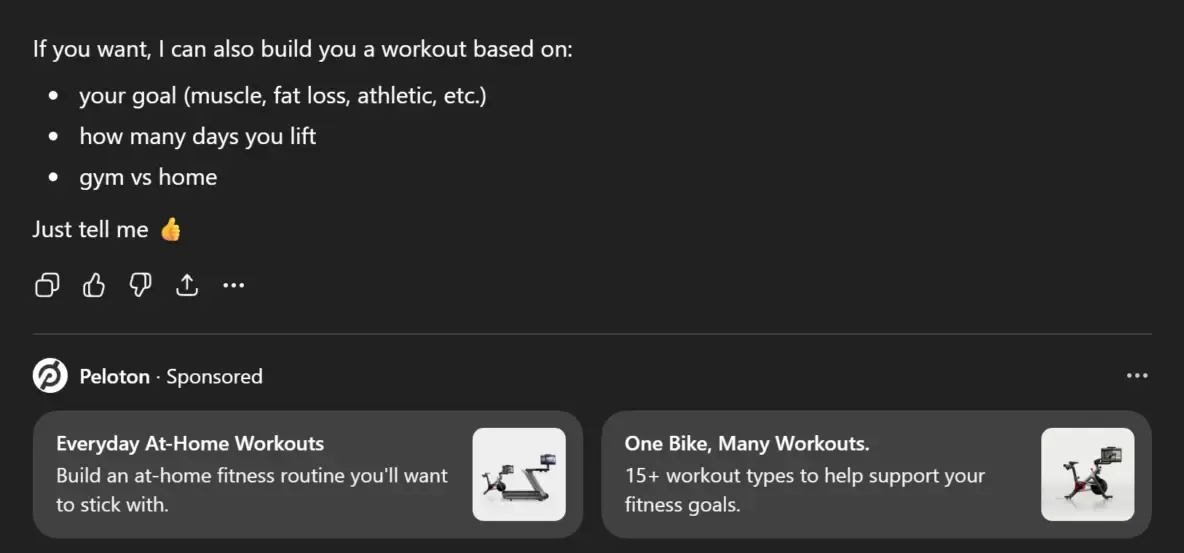
In February 2026, OpenAI started testing advertisements within ChatGPT conversations for a select group of users in the US. These ads appear as a "Sponsored" block after the AI's response, aiming to be relevant to the user's query.
For instance, when a user asked, "What's the best way to book a weekend trip?" ChatGPT responded with sponsored links to weekend tours from Expedia.
High Costs and Strict Limitations
Access to the pilot program is currently exclusive and comes with a steep price tag. The minimum ad spend is $200,000, with a CPM (cost per thousand impressions) of around $60. According to Adweek, the initial group of advertisers includes major brands like:
- Target
- Adobe
- Williams-Sonoma
- Albertsons
Unlike traditional platforms like Google Ads, OpenAI is positioning ChatGPT Ads primarily as a tool for brand awareness and image enhancement, not direct-response conversions like clicks (CPC) or sales (CPA).
What Data Do Advertisers Get?
The platform's reporting and targeting capabilities are intentionally limited to protect user privacy:
- Limited Metrics: Advertisers only see the number of impressions and clicks.
- Privacy First: The context of the conversation and user data are not shared with brands.
- Sensitive Topics Excluded: Ads will not appear in conversations about health, religion, or politics.
Competitors Take a Different Path
OpenAI's move has prompted varied reactions from its rivals. Google has sent mixed signals about introducing ads to its Gemini chatbot, first telling partners ads were planned for 2026, then later denying those plans. Meanwhile, Perplexity, an early adopter of in-chat ads, abandoned the model by late 2025, citing concerns that "sponsored links would undermine audience trust." The company now focuses on its paid subscription tiers.
Ads are coming to AI, but not to Claude.
Anthropic has taken the most aggressive anti-ad stance. The company has publicly promised not to integrate ads into its chatbot, Claude, to avoid biasing its responses. This commitment was highlighted in a Super Bowl commercial that directly contrasted its ad-free approach with the industry trend.
Ethical Concerns and a Divided Industry
The advertising community itself is split. While some, like the owner of eco-friendly brand Tru Earth, see a major opportunity, others are more cautious. The Search Mechanics agency warned that early advertisers are essentially "guinea pigs" for an unproven platform.
The move has also drawn criticism from former OpenAI researcher Zoe Hitzig. While not against advertising in principle, she warned of the risks of manipulation when placing ads inside a chatbot, a space where users often share their most personal thoughts. Even with initial safeguards, the potential for misuse remains a significant concern as AI and advertising continue to merge.